
pharmaceutical marketing

America's top selling drug is an antipsychotic

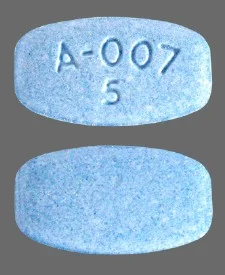
AbilifyI learned recently that the antipsychotic Abilify is the biggest selling prescription drug in the U.S.  (I try to stay calm and collected here, but that's a fact worth boldface.)  To be a top seller, a drug has to be expensive and also widely used.  Abilify is both.  It's the 14th most prescribed brand-name medication, and it retails for about $30 a pill.  Annual sales are over $7 billion, nearly a billion more than the next runner-up. Yes, you read that right: $30 a pill.  A little more for the higher dosages.  There's no generic equivalent in the U.S. as yet; Canadian and other foreign pharmacies stock the active ingredient, generic aripiprazole, for a fraction of what we pay in the states.  However, Abilify's U.S. patent protection expires next month, and aripiprazole may soon be available here at lower cost.

Abilify is an "atypical" antipsychotic.  This is a confusing term, as these are now the drugs typically prescribed for schizophrenia and other psychotic conditions.  The name comes from their atypical mechanism of action, as compared to the prior generation of antipsychotics.  "Atypicals" also play a useful role in the treatment of bipolar disorder, where traditional medications such as lithium require blood level monitoring, and often multiple doses per day.

Antipsychotics are powerful drugs with considerable risks and side-effects.  But psychosis and mania are powerful too.  As with cancer chemotherapy and narcotic painkillers, a risky and/or toxic treatment can be justified in dire circumstances.  It's also true that one crisis visit to an emergency room, not to mention a psychiatric admission, may cost more than months of Abilify, and can itself be emotionally traumatic.  If Abilify keeps psychosis at bay and prevents hospitalization, the risks are worth it.  The cost is worth it too — if a less expensive generic atypical won't do.  Several are now available.

As I wrote in 2009, the manufacturer Otsuka tapped a much larger market for Abilify as an add-on treatment for depression.  I objected to the consumer ad campaign that trumpeted this expensive, dangerous niche product for common depression.  While there's a role for Abilify in unusually severe, unresponsive depression, advertising it widely as a benign "boost" for one's antidepressant was, and is, irresponsible.  By analogy, the makers of the narcotics OxyContin and Percocet could run ads showing people with bad headaches, and urging fellow headache sufferers to ask their doctors "if Percocet is right for you."

And these are merely the FDA-approved uses of Abilify.  Atypicals are also widely prescribed off-label for use as non-addictive tranquilizers and sleeping pills, and to treat other psychiatric conditions.  There's no advertising for off-label use, so the onus falls squarely on prescribers who balance the risks and benefits of these drugs in a manner that research tends not to support.  In short, a costly, risk-laden medication created to ease the awful but relatively uncommon tragedy of schizophrenia is now the top selling prescription drug in America owing to its widespread use in garden variety depression, anxiety, and insomnia.

It's been said that the top selling drug in any era is a comment on society at that point in time.  Valium held the lead during the 1960s and 70s, suggesting an age of uncertainty and anxiety.  The top spot was taken over by the heartburn and ulcer medication Tagamet in 1979.  Tagamet was the first "blockbuster" drug with more than $1 billion in annual sales. Cholesterol-lowering Lipitor was the biggest seller for nearly a decade after it was released in 1997, the same year the FDA first allowed drug ads targeting consumers.  Pfizer spent tens of millions on such ads — and sold over $125 billion of Lipitor over the years.  The stomach medicine Nexium took over after that.  Without covering all the top sellers, it's fair to say that Americans spend a great deal on prescriptions to deal with emotional distress and unhealthy lifestyles.  The blockbusters also show how mass-marketing brand name drugs has becomes a huge and highly profitable business.

What does it say about us that Abilify holds the top spot now?  What does it mean to live in the Age of Abilify?  First, that we're still looking for happiness and peace in a bottle of pills, costs and risks be damned.  Second, that there's nearly no end to the money the U.S. health care system will spend on problems that can be addressed more economically.  And third, it's a stark reminder that commercial interests seek to expand sales and profits whenever possible.  They find (or create) new markets, promote products by showcasing benefits and concealing drawbacks, appeal to our emotions instead of our rationality.  This is simply how business works.  We should not be surprised, yet we ignore this reality at our peril, particularly when it comes to our health.

Between medical paternalism and servility

ID-10038434Even today there are patients who leave diagnosis and treatment entirely to their doctors.  They make no effort to inform themselves about their illness or chart their own course; they do whatever their doctors advise.  Once the norm, this passive, willfully naive attitude has withered in the face of a multigenerational attitude shift, coupled with the wealth of medical information at hand today.  Direct-to-consumer drug ads on television, online peer support, medical websites and blogs of all stripes, "Dr. Google," PubMed — it almost takes dedicated effort to avoid learning about one's medical issue.   The complementary role of doctors as kindly but authoritarian caretakers feels outdated by decades, and to many nowadays, offensive.  "Paternalistic" has become the epithet of choice for doctors who fail to recognize, respect, and make room for patient autonomy and medical self-determination. Most doctors practicing today, even those of us decades into our careers, began medical training at a time when patient empowerment had already gained ground in the U.S.  Many of us supported it wholeheartedly.  In college I studied medical ethics and patient autonomy.  I volunteered at a community clinic called "Our Health Center" that aimed to empower patients.  My stated goal when applying to medical school was to help patients take responsibility for their own health.  Even today I tend to over-explain my reasoning to my patients, and to err — and sometimes it is an error — on the side of offering a smorgasbord of options along with their risks and benefits.

However, over the years the goalposts have moved.  For a growing subset of patients it is no longer enough that we doctors talk to them as fellow adults.  The one-time goal of shared decision-making has, in some circles, given way to a deep skepticism toward doctors and our expertise.  Some regard us as irksome gatekeepers who add little to medical decision making and serve mainly as roadblocks to obtaining the medical tests or treatments they already know they need.   In this jaundiced view, our role is reduced to rubber-stamping: ordering desired tests, signing requested prescriptions, drafting work excuses, and so forth.  For example, I've received many calls from would-be patients seeking a prescription stimulant for self-diagnosed "adult ADHD." The callers sound dismayed when I point out that my diagnosis may not agree with theirs.  Similarly, patients seek me out to provide documentation and advocacy on behalf of a psychiatric disability they swear they have, but I haven't yet evaluated.  I find myself wishing that such callers could face the consequences of their own decisions without involving the unwanted, apparently superfluous impediment of a doctor.

These examples from my practice could be dismissed as drug-seeking or "gaming the system."  But skepticism toward physicians and our expertise goes much further.  Patients insist on antibiotics for viral (or non-existent) infections.  Parents refuse to vaccinate their kids.  Online forums abound with horror stories of patients misdiagnosed and mistreated, who finally escape this nightmare only by taking matters into their own hands.  "Ask your doctor" drug ads imply that doctors will fail to consider the advertised treatment if not for patient self-advocacy (and the generous assistance of a multimillion dollar marketing campaign).  California has a voter initiative this fall that, among other provisions, would mandate random drug testing of physicians for the first time in the U.S.

There is a movement afoot to share medical records with primary-care patients, ostensibly for doctor-patient collaboration, but often justified on the basis of "transparency."  It is now deemed paternalistic for doctors to keep private notes of our own work, even though this is accepted in other professional and consultative fields.  Institutions no longer trust us to do high-quality work without oversight by non-physicians who track quality and patient satisfaction measures.  Some patients now balk when doctors ask personal questions, e.g., about religious practices or hobbies, that are not obviously related to a manifest disease process.  Learning about our patients as people, their strengths as well as weaknesses, is apparently also paternalistic.  Shouldn't the patient decide what areas of information to divulge?

Reducing doctors to servile technicians renders us safely powerless.  Never mind that we can no longer diagnose or treat illness as well, for example by drawing unanticipated connections between habits and disease.  For many patients, and apparently for society at large, it is more important not to feel a power differential.

This is an odd sentiment indeed.  Anyone offering a skilled service, professional or not, wields a degree of power — and at least a little paternalism — over clients or customers. The computer professionals and attorneys who come to my office expect their own clients to defer to their expertise.  My mechanic knows more about cars than I do, my barber about hair, my grocer about what produce is in season.  Somehow we don't find it threatening to put our faith in these authorities, especially when they welcome dialog and involve us in the decisions and recommendations that affect us personally.

People sometimes wonder when they may question a doctor's diagnosis or advice.  I say always.  I've spent a career encouraging patients to be curious, to ask questions, to understand their suffering and what may help.  This is the legacy of patient empowerment: all of us taking responsibility for our own well-being, and medical professionals respecting the right of patients to make their own well-informed health care decisions.

However — and it is a big however — this is not the same as physicians rubber-stamping everything patients believe or want.  Shared decision-making lies between "doctor's orders" and "patient's choice" and follows the ethical standard of acting in the patient's best interest (illustration courtesy of Practice Matters):

Doctors-orders-chart-450


Nor should fear of sounding paternalistic silence us when detractors claim that everyone's opinion is equally valid.  It is falsely modest and politically naive to deny our own expertise.  When it comes to medical matters, we doctors, while admittedly fallible, are nonetheless right far more often than we are wrong, and far more often than even intelligent, well-read non-physicians are.  Like the attorney, computer professional, mechanic, barber, and grocer, we know things most other people do not.  There is no shame in that, nor is it a power trip to point it out.  A paternalism that demeans others is bad; a servility that demeans ourselves may be worse.

Top image courtesy of Ambro at FreeDigitalPhotos.net

Review of "Century of the Self" (BBC documentary)

Edward Bernays It may have been a patient (I can't recall) who suggested I search online for the 2002 BBC documentary by Adam Curtis called Century of the Self.  It turns out the video is freely available at several sites; the full four-hour documentary can be viewed or downloaded here, or each of the hour-long installments here.  In briefest outline, Century of the Self advances the thesis that Freud's views of the unconscious set the stage for corporations, and later politicians, to market to our unconscious fears and desires.  It's gripping, it explains a lot, and it reminds me of The Matrix in the way it portrays an ugly dystopian truth hidden behind bland normality.  Except Century of the Self is real, not science fiction.

One reviewer offers: "There are very few movies I wish I could force my friends to watch, that I feel encapsulate a feeling that I've had but have been unable to articulate."  Indeed, Century of the Self ties together several observations I myself have made over the years about corporate marketing — and then it goes much further, placing those observations in a broad context.  For example, in my youth I found it odd that any products at all could be marketed to hippies, those bastions of non-materialism.  Yet by the early 1970s the signature unkempt long hair became a "style" featured in fashion magazines and offered in hair salons, and blowdryers were widely sold to cater to this new look.  Less than a decade later, punk rockers pierced their clothes with rows of safety pins, and it wasn't long before Macy's sold brand new clothes with safety pins already inserted.  Goth, grunge, hip-hop, or hipster, it doesn't matter.  Products will be sold.  As the Borg say: "You will be assimilated.  Resistance is futile."

I noticed something similar at the other end of the materialism continuum as well.  By the 1980s, expensive, formerly niche products were being avidly marketed to ordinary consumers.  Regular cooks bought restaurant-grade pots and pans, average shutterbugs purchased advanced cameras, families who never left the suburbs drove SUVs that could go off-road and up mountainsides.  What motivated people to spend their hard-earned money on features they'd never use and quality they'd never fully appreciate?  Again, it was hard to escape the conclusion that corporations sold self-image and emotional aspirations, not rational goods and services.

I'm old enough to remember when "lifestyle" was first popularized as a sales term, and when pitches aimed at self-image were still a little ham-handed and obvious (e.g., "What sort of man reads Playboy?").  Now we fail to notice that it is literally impossible to sell a new car, or prescription medications to the public, with an appeal to rationality. No one even tries.  Back in the mid-1970s it was novel and slightly jarring when gasoline companies ran ads not (directly) to sell gas, but to improve their corporate image.  We've come to accept that as routine nearly 40 years later.

It hasn't always been so.  Century of the Self shows how advertising once aimed to influence rational choice.  This gave way in the early 20th century to advertising aimed to connect feelings with a product.  Amazingly enough, at the root of this change was Sigmund Freud's nephew, Edward Bernays.  Bernays, an American propagandist in WWI, applied his wartime experience and his uncle's theories of the unconscious to peacetime commerce.  He invented the field of public relations, popularized press releases and product tie-ins, and changed public opinion about matters ranging from women smoking to the use of paper cups — all to increase sales.  Viewing politics as just another product to sell, Bernays also helped Calvin Coolidge stage one of the first overt media acts for a president, and helped engineer the 1954 coup in Guatemala on behalf of his client the United Fruit Company, by painting their democratically elected leader as communist.

This and more happens in just the first hour of the documentary, titled "Happiness Machines."  The second hour, the weakest in my view, is called "The Engineering of Consent" and focuses on the ascendancy of psychoanalysis and Anna Freud's consolidation of power.  The point here is that the unconscious was seen as a dangerous menace that needed to be kept under lock and key.  Rational choice, especially by crowds, was unreliable under its influence, so "guidance from above" (in Bernays' words) was needed from political leaders and corporations for the public good.  The conformity and mass-marketing of the 1950s reflects this view of a public that cannot be trusted to think for itself.  The pendulum swings the other way in the third and best installment, "There is a Policeman Inside All Our Heads [and] He Must be Destroyed."  By the 1960s the human potential movement urged the expression of impulses instead of their repression.  Business was eager to help.  By marketing products as a means of self-expression, business turned from channeling public impulses to pandering to them.  There is a fascinating discussion in the film about political activism being co-opted in this process: making the world a better place gave way to making oneself better in ways that, not coincidentally, required buying more goods and services.  The final segment, called "Eight People Sipping Wine in Kettering," follows this impulse-pandering into politics.  Instead of political leadership, we now have politics led by focus groups.  The public gets what it asks for (V-chips and populist slogans), not what it needs (healthcare and infrastructure improvements).

Freud himself is treated ambiguously in the documentary.  Although he benefitted by his nephew's promotion of his writing, one gathers he was uncomfortable with commercial exploitation of his ideas.  Enigmatically, the final camera shot zooms in on Freud's tombstone.  Perhaps we are to imagine him turning over in his grave.

How can democracy work best, given that our choices are inevitably swayed by irrational unconscious forces?  Curtis isn't explicit, but implies that treating people as rational tends to make them moreso.  Even as a firm believer in the dynamic unconscious, I find this a hopeful point of view.  It also occurs to me that it is a researchable hypothesis, and that such research may in some measure counterbalance commercial and political profiteering from research on unconscious influence.  The ethical implications of powerful social institutions exerting covert influence are only telegraphed in the documentary; they deserve a detailed analysis in their own right.

Century of the Self has engaging interviews, rare archival footage, a sweeping view of recent history, and, alas, somewhat irritating music.  It was reviewed quite positively when it came out, and despite being over ten years old, still has a great deal to offer.  I don't wish to force anyone to watch it, but I do highly recommend it.

The APA annual meeting: a photo essay

MosconeCenterAs posted previously, last month I attended the American Psychiatric Association's (APA's) annual conference.  Straying from my usual format, I thought I'd post pictures from the meeting and, of course, offer comments. The meeting took place in Moscone Center, a conference center complex located just south of Market Street in downtown San Francisco.  Depicted here are anti-psychiatry protesters who held a rally in front of the main entrance at noon on the first day.  There was also an exhibit of psychiatry's cruelties (psychosurgery, shock treatment, inhumane conditions in asylums, etc) running all five days in a tent across the street from the conference.  GamelanConcert The conference was also a block from Yerba Buena Gardens, where I caught a very pleasant Balinese gamelan concert at the same time as the protest rally. This simultaneity — two events scheduled to coincide, forcing a choice — was a constant in the conference as well. The "scientific program" consisted of  numerous overlapping talks, such that attending any presentation meant missing five or more other good ones.  I'm not sure why the APA opted for such frustrating redundancy.  Nor can I explain why predictably popular talks were scheduled into small rooms, with the result that dozens of registrants were turned away once the room filled.  For instance, the crowd for Otto Kernberg's psychoanalytic talk on love and aggression was several times larger than the assigned room.KernbergAt APA  In this unusual case we were all moved to a cavernous hall at the last moment, where Dr. Kernberg gave a warm and very engaging presentation on the necessity and creative consequences of aggression in romantic love.  (I like how this photo depicts the renowned psychoanalyst Kernberg representing the APA in an era of biological ascendancy.)

The same huge auditorium was to hold the keynote address by Bill Clinton.  However, Mr. Clinton was ill and could not be there in person.  Several hundred (a couple thousand?) conference-goers nonetheless waited over an hour to see him on video.  Mr. Clinton was pleasant, thoughtful, and charismatic, but didn't offer much specifically about psychiatry or mental health.ClintonCrowd  Mostly he spoke about public health needs in general.

I didn't take many photos in the talks themselves.  Officially it was forbidden, although this rule was routinely ignored by attendees.  The quality of the presentations was high — I mostly chose "mainstream" ones this time, not the many off-beat and generally smaller meetings.  I attended presentations on suicide, personality disorders, PTSD, sexual compulsions, DSM-5 and mood disorders, the controversy over antidepressant efficacy, psychiatrists writing and blogging for the general public, teaching psychotherapy to residents, and assessing the capacity of demented patients to make medical decisions for themselves.  There were dozens of others I would have liked to attend, had they not coincided with the ones I chose.

I skipped the industry-sponsored, free lunch or dinner, non-CME presentations.  But I did wander through the exhibit hall, both to see the "new investigator" scientific posters, and to peruse the brand-new DSM-5. In contrast to the last time I went to this conference, the industry booths seemed less garish and "over the top."APAexhibits  Of course, there were still a lot of them.  Several had raffles where valuable prizes such as an iPad Mini could be won by those who gave the company their contact information.  One booth offered a pocket digest of the new DSM-5, MSRP about $60, to everyone who watched a 12 minute presentation and coughed up a mailing address.  I was tempted... but no.  (It's interesting to ponder how much a single psychiatrist contact is worth to a drug company.  Much more than $60, I'd venture.)

The DSM-5 itself is $200 in hardcover, $150 in paperback — an unabashed moneymaker for the APA.  Despite the incredible controversy it stirred up, my impression is that the changes from DSM-IV-TR are relatively minor.  In particular, the personality disorder section hasn't changed much, although the new edition is no longer multi-axial, i.e., there is no "Axis 2".  Some language has been made more precise, as well as more "biological" in some passages, and some disorders have been expanded to include more that would previously have been considered normal.  Whether this is good or bad depends on one's perspective in several respects; mostly I find it unfortunate.  DSM classifications often matter more to insurers and disability officers than to practicing psychiatrists, who in David Brooks' words are "heroes of uncertainty" (echoing an earlier post of mine, but I'll forgive him for not quoting me).  We deal with individuals, not disease categories.NoAveragePatient

I will end with a slide from the talk on antidepressant efficacy that summarizes this tension in my field.  As I've discussed previously, randomized controlled trials (RCTs) are the gold standard for scientific rigor in psychiatry; however, a lot of psychiatry is not scientific in this sense.  DSM categories help define the "average" patient with a particular disorder, leaving a lot of wiggle room since the categories are not based on etiology.  RCTs say which treatments best help this "average" patient, represented by the computer composite in the center of this slide.  However, I don't see "average" patients,  I see one of the 12 individuals who contributed to the composite.  Thus, for me, the new DSM was a sideshow at the conference.  The most insightful presentations, whether on PTSD, suicide, or capacity assessment, combined science and the nuanced human communication of meaning.  They recognized that our work is informed by science but goes well beyond it.  Anti-psychiatrists don't like this, insurers don't like this, neuroscientists don't like this, even many psychiatrists don't like this.  But it's true and inevitable for the foreseeable future.  I like it.  As for the APA annual meeting, I'm glad I went, and equally glad I won't feel the need to go back for several years at least.

Going to the APA meeting?

APACourseBrochureThe annual meeting of the American Psychiatric Association (APA) is in San Francisco this May.  I've attended twice before as I recall, both times when it was here.  I enjoyed it, and even felt it was worth the $1000 we non-members pay to get in, although in my opinion it's not worth doubling that for airfare and lodging to attend in another city.  The presentations were generally of high quality, and so plentiful that I always found something worthwhile to attend.  Up to 50 CME (continuing medical education) hours are available over five days, enough to maintain a California medical license for two years.  This year, in addition to the other presentations, the new DSM-5 will be unveiled and discussed, so we can anticipate hearing a lot that is new and essential for clinical practice.  Bill Clinton will give the keynote speech. Yet it's a hard decision for me to attend this meeting.  The APA and its annual meeting reflect aspects of psychiatry that concern me.  In 2006 the drug industry accounted for about 30 percent of APA's $62.5 million in financing, half through drug advertisements in its journals and meeting exhibits, and the other half sponsoring fellowships, conferences, and industry symposia at the annual meeting.  Every year the annual meeting features a huge exhibit hall of lavish booths courtesy of the pharmaceutical industry.  In past years I watched my fellow psychiatrists line up for branded coffee mugs and similar swag; although voluntary restrictions by the Pharmaceutical Research and Manufacturers of America (PhRMA) in recent years have curtailed this, the APA itself welcomes such giveaways according to this year's information sheet for exhibitors.  This year there are industry sponsored "Product Theater" presentations most days around lunchtime (six sessions total, up to 250 attendees per session), and "Therapeutic Update" meetings at dinnertime (three two-hour sessions) — pure marketing vehicles that are not approved for CME, that lack any pretense of scientific balance or neutrality, and that come with a nice free meal to tickle the limbic systems of the recipients.  In fact, there's a surprisingly wide range of promotional and marketing opportunities at the meeting (pdf here) that the APA sells to industry.  We participants may sign up for the scientific presentations and collegiality, but the APA invites us for the millions of dollars we bring in.

Of course, individual attendees aren't forced to take a seat at a "Therapeutic Update" and may never set foot in the exhibit hall.  So what's the problem?  Can't attendees enjoy an educational experience free of commercial influence?  Unfortunately, with APA selling everything from sponsored wi-fi, to plasma-screen billboard space, to branded do-not-disturb signs at the hotel, the industry flavor will be hard to miss.  Registrants are warned that our names, titles, mailing addresses, and email addresses will be "shared" (i.e., sold) to meeting exhibitors.  Perhaps there's an unpublicized opt-out I'm not aware of.

Whatever one thinks of this blizzard of advertising to a highly selected, captive audience of over 10,000 psychiatrists, it hardly needs to be said that the practice of psychotherapy will have no deep-pocketed sponsorship; healthy nutrition, exercise, lifestyle balance, and introspection will enjoy no "Product Theater" or "Therapeutic Update."  If this year's meeting resembles those I attended in the past, many presenters will mention the importance of psychosocial factors in mental health, and, if one seeks them out, there will be talks by some of the luminaries in trauma research and psychological treatments.  But this will be in the context of blaring signs promoting the newest antidepressant, mood stabilizer, and anti-psychotic — which nowadays may all be the same product — and a zeitgeist of DSM diagnoses leading to pharmaceutical remedies.

Speaking of DSM, the unveiling of DSM-5 ought to be interesting.  DSM diagnosis is an integral part of most mental health (not just psychiatric) practice, as treatment authorization and reimbursement by health plans often hinge on the DSM disorder for which the patient "meets criteria."  Both the process of creating the new DSM-5 and its conclusions have come under repeated attack from a range of reputable critics, including the chair of the DSM-IV Task Force Dr. Allen Frances, Division 32 of the American Psychological Association (the "other" APA), the British Psychological Society, the American Counseling Association, and others.  One common criticism is that diagnostic categories are being loosened (or widened), such that more patents will meet criteria for a mental disorder, and in turn more psychiatric medications will be prescribed.  Dr. Frances charges that the APA treats publication of DSM-5 as a "cash cow," citing the hefty cost ($199 hardcover, $149 paperback) of this instant and inevitable best-seller.  My own feelings about the DSM are mixed, and I'm curious to see how the newest edition turned out, particularly the section on personality disorders.

Despite my concern about undue commercial influence, misplaced priorities, and its controversial diagnostic manual, I plan to go to the APA meeting this year.  There's too much of value to me in all those presentations.  But when I pass the anti-psychiatry protesters at the entrance, I know I will wish for some way to declare myself neither anti-psychiatry nor, despite appearances, in full agreement with the spectacle within.