
Medication

America's top selling drug is an antipsychotic

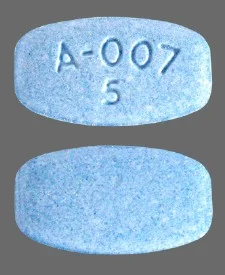
AbilifyI learned recently that the antipsychotic Abilify is the biggest selling prescription drug in the U.S.  (I try to stay calm and collected here, but that's a fact worth boldface.)  To be a top seller, a drug has to be expensive and also widely used.  Abilify is both.  It's the 14th most prescribed brand-name medication, and it retails for about $30 a pill.  Annual sales are over $7 billion, nearly a billion more than the next runner-up. Yes, you read that right: $30 a pill.  A little more for the higher dosages.  There's no generic equivalent in the U.S. as yet; Canadian and other foreign pharmacies stock the active ingredient, generic aripiprazole, for a fraction of what we pay in the states.  However, Abilify's U.S. patent protection expires next month, and aripiprazole may soon be available here at lower cost.

Abilify is an "atypical" antipsychotic.  This is a confusing term, as these are now the drugs typically prescribed for schizophrenia and other psychotic conditions.  The name comes from their atypical mechanism of action, as compared to the prior generation of antipsychotics.  "Atypicals" also play a useful role in the treatment of bipolar disorder, where traditional medications such as lithium require blood level monitoring, and often multiple doses per day.

Antipsychotics are powerful drugs with considerable risks and side-effects.  But psychosis and mania are powerful too.  As with cancer chemotherapy and narcotic painkillers, a risky and/or toxic treatment can be justified in dire circumstances.  It's also true that one crisis visit to an emergency room, not to mention a psychiatric admission, may cost more than months of Abilify, and can itself be emotionally traumatic.  If Abilify keeps psychosis at bay and prevents hospitalization, the risks are worth it.  The cost is worth it too — if a less expensive generic atypical won't do.  Several are now available.

As I wrote in 2009, the manufacturer Otsuka tapped a much larger market for Abilify as an add-on treatment for depression.  I objected to the consumer ad campaign that trumpeted this expensive, dangerous niche product for common depression.  While there's a role for Abilify in unusually severe, unresponsive depression, advertising it widely as a benign "boost" for one's antidepressant was, and is, irresponsible.  By analogy, the makers of the narcotics OxyContin and Percocet could run ads showing people with bad headaches, and urging fellow headache sufferers to ask their doctors "if Percocet is right for you."

And these are merely the FDA-approved uses of Abilify.  Atypicals are also widely prescribed off-label for use as non-addictive tranquilizers and sleeping pills, and to treat other psychiatric conditions.  There's no advertising for off-label use, so the onus falls squarely on prescribers who balance the risks and benefits of these drugs in a manner that research tends not to support.  In short, a costly, risk-laden medication created to ease the awful but relatively uncommon tragedy of schizophrenia is now the top selling prescription drug in America owing to its widespread use in garden variety depression, anxiety, and insomnia.

It's been said that the top selling drug in any era is a comment on society at that point in time.  Valium held the lead during the 1960s and 70s, suggesting an age of uncertainty and anxiety.  The top spot was taken over by the heartburn and ulcer medication Tagamet in 1979.  Tagamet was the first "blockbuster" drug with more than $1 billion in annual sales. Cholesterol-lowering Lipitor was the biggest seller for nearly a decade after it was released in 1997, the same year the FDA first allowed drug ads targeting consumers.  Pfizer spent tens of millions on such ads — and sold over $125 billion of Lipitor over the years.  The stomach medicine Nexium took over after that.  Without covering all the top sellers, it's fair to say that Americans spend a great deal on prescriptions to deal with emotional distress and unhealthy lifestyles.  The blockbusters also show how mass-marketing brand name drugs has becomes a huge and highly profitable business.

What does it say about us that Abilify holds the top spot now?  What does it mean to live in the Age of Abilify?  First, that we're still looking for happiness and peace in a bottle of pills, costs and risks be damned.  Second, that there's nearly no end to the money the U.S. health care system will spend on problems that can be addressed more economically.  And third, it's a stark reminder that commercial interests seek to expand sales and profits whenever possible.  They find (or create) new markets, promote products by showcasing benefits and concealing drawbacks, appeal to our emotions instead of our rationality.  This is simply how business works.  We should not be surprised, yet we ignore this reality at our peril, particularly when it comes to our health.

Undermedicated

under-medicatedA patient I see for psychotherapy, without medications except for an occasional lorazepam (tranquilizer of the benzodiazepine class), told me his prior psychiatrist declared him grossly undermedicated in one of their early sessions, and had quickly prescribed two or three daily drugs for depression and anxiety.  He shared this story with a smile, as we've never discussed adding medication to his productive weekly sessions that focus on anxiety and interpersonal conflicts.  Indeed, the lorazepam is left over from his prior doctor.  I doubt I would have ordered it myself, although I don't particularly object that he still uses it now and then. Of course, there's a completely innocuous way to explain this difference between his prior psychiatrist and me.  My patient could have looked much worse back then, in dire need of pharmaceutical relief.  However, he didn't relate it to me that way, and I have no reason to doubt him.  There's also the possibility that I'm missing serious pathology in my patient — that I too would urge him to take medication if only I recognized what I'm now overlooking.  But... I don't think so.  I'm left to conclude that his prior psychiatrist and I evaluated essentially the same presentation rather differently.

In particular, I'm struck by the term "undermedicated" (more often spelled without the hyphen, according to my Google search).  This judgment most often comes up in speaking about populations, as in the debate over whether antidepressants are over-prescribed or under-prescribed in society at large, or whether children are diagnosed with ADHD and prescribed stimulants too often, or not often enough.  Under- and overmedication are also commonly mentioned when describing medication management of pain, a thyroid condition, mania, or chronic psychosis in an individual.  Here the terms express disagreement with a particular dosage, where the benefits of treatment and adverse side-effects or risks are deemed out of balance one way or the other.

"Undermedicated" also implies that adding medication is the preferred or only sensible treatment approach.  While this may always be true in hypothyroidism, it clearly isn't with regard to physical or emotional pain.  The term rhetorically denies non-medication alternatives.  I would also add that, to my ear, "overmedicated" and especially "undermedicated" sound dehumanizing, as though referring to a machine that is out of adjustment, or a chemical solution being titrated on a lab bench.  Since the natural state of human beings is not to be medicated at all, it sounds a bit odd to hear someone — as opposed to one's disease — assessed this way.  Perhaps I am especially sensitized to this after reading a controversial article by Moncrieff and Cohen that highlights the "altered state" induced by psychotropics and their lack of known, specific mechanisms of action.  There is often a supposition that medication dosage correlates with symptom relief.  This is not always true of subjective states, underscoring that the complexity of human experience often belies simple "over/under" judgments.

My patient's mood and anxiety vary with his interpersonal situation.  It wouldn't occur to me to turn his "thermostat" up or down in general, even if drugs reliably could do this.  Yet I know colleagues who'd argue that one, two, or even three daily medications could help him overcome his everyday challenges of dealing with people.  These approaches point to different fundamental viewpoints in psychiatry.  Does the patient have a disease, an as-yet-undiscovered chemical (or electrical, viral, inflammatory, etc) imbalance in the brain that is best remedied by a medical intervention, accurately dosed neither "over" nor "under"?  In acute mania or florid psychosis, as in hypothyroidism, it seems to me the answer may be yes, although this is unproven and time will tell.  Perhaps, too, in severe melancholic depression.  But in social anxiety?  Self-consciousness?  Feeling discouraged about one's career?  The field's perspective on these has shifted in recent decades, such that now a hidden biological cause is assumed by default, or at least held out as a rationale for treatment.  It is only by making this dubious assumption that one can speak of undermedicating such complaints, or the people who have them.

Psychotherapy as generic conversation — Sloppy thinking in psychiatry 4

This fourth installment in my "sloppy thinking" series turns to psychotherapy, or what passes for it in some psychiatric practices.  A very brief history: Sigmund Freud, a neurologist, invented psychoanalysis and its offshoot, psychodynamic psychotherapy, about 120 years ago.  It was, first and foremost, a treatment that involved talking — not merely a conversation that happened to make the patient feel better.  Years later, the object-relations school of psychoanalysis and the humanistic psychology movement of the 1960s partly shifted the focus of dynamic psychotherapy away from technique and toward a healing relationship, a shift prefigured by pastoral counseling and by the ministrations of the nursing profession.  Nonetheless, dynamic psychotherapy remained a treatment: a professional service with clear goals and a coherent rationale, aimed to remedy defined psychological conflicts or deficits.  Meanwhile, over the same century or so, academic psychologists developed the theories and practices of behaviorism via experiments with animals, and later applied behavior modification and various behavioral and cognitive therapies to human suffering.  While such treatments could be offered in a humane and caring manner, the relationship itself was not considered curative. Psychoanalysis and psychodynamic therapy originated in a medical context, and psychiatrists historically have been trained in its theory and practice.  (In contrast, psychologists historically tended to practice the empirically based behavioral and cognitive therapies developed in academia, although this distinction between the disciplines has faded.)  Prior to the advent of psychoanalysis, psychiatry was a medical specialty focused on the management of severe mental illnesses that rendered sufferers incapable of living in mainstream society.  But by the mid-20th century, the field had adopted the new "talking cures" to treat higher functioning patients.  For a few decades, roughly 1950 to 1980, the popular image of the psychiatrist was a psychoanalyst with the trademark couch in the office.

The emphasis in psychiatric training and practice shifted dramatically away from psychotherapy and toward medication treatments in the 1980s as a result of several factors.  Promising classes of medications such as SSRI antidepressants and atypical neuroleptics were developed; federal research funding shifted toward biological psychiatry; psychiatry's new diagnostic manual (DSM-III) encouraged medical-model thinking; managed care tightened the screws on reimbursement; and competition from non-physician mental health professionals heated up.  Psychopharmacology became a defensible niche for psychiatry, unlike psychotherapy which saw increasing competition from psychologists, social workers, marital and family therapists, and others.

Currently, many American psychiatry residencies offer minimal training in psychodynamics, or psychotherapy in general (interesting debate here).  I consider this very unfortunate.  Psychodynamically informed treatment is far richer and more sensitive — ultimately, I have to believe, more effective — even if psychodynamic psychotherapy itself is not offered.  For example, unconscious dynamics can help explain medication non-compliance, and can shed light on difficult psychiatric consultations on medical or surgical inpatients.  It's hard to deny that a mental health professional with a deeper appreciation of human emotions, conflicts, and psychological defenses has an advantage over the same professional without this appreciation.

Where's the sloppy thinking?  It results from the inescapable fact that most psychiatric patients harbor thoughts and/or feelings they want to talk about.  A psychiatrist who avoids all such conversation feels like an "ape with a bone," a medication technician who does his own little piece of work well, but misses the big picture.  So the psychiatrist talks with the patient for 30, 45, or 50 minutes, which makes both the psychiatrist and patient feel better in the moment.  It is billed as psychotherapy, but is it?

That depends on what happens in those 30, 45, or 50 minutes.  Is it well-conducted cognitive-behavioral therapy?  Hardly ever.  Nor is it psychodynamic psychotherapy if it's no more than a conversation that temporarily makes the patient feel better.  Dynamic psychotherapy is a structured treatment that includes a dynamic case formulation, a coherent rationale, strategic interventions, and treatment goals — features uniformly absent in this typical scenario.  Some call these unstructured conversations "supportive psychotherapy," but even that has a technical definition and clear goals.  Supportive psychotherapy is more than letting the patient "vent," or chat as though it were a social visit.  Perhaps all this mislabeling is an unfortunate mistake by well-meaning practitioners who were never trained to perform or recognize actual psychotherapy.  Or maybe it's intellectual laziness.  Or insurance fraud.

An honest profession would call such encounters what they are: Humane medication visits.  Stripped of the pretense of psychotherapy, we might admit that it often takes more than ten or 15 minutes to find out how a patient is doing, and that conversely it doesn't require aimless (yet remunerated) chatting for the better part of an hour either.  By clearly differentiating psychotherapy from generic doctor-patient conversation, we'd regain respect from other mental health professionals who have come to believe that psychiatrists don't take psychotherapy seriously, or that we pompously claim we know what we're doing when we don't.  These criticisms really boil down to irritation at psychiatry's sloppy thinking about psychotherapy, a tragic irony considering the field's long history with this treatment modality.

You guessed it: photo courtesy of Petr Kratochvil.

Polypharmacy — Sloppy thinking in psychiatry 2

My second post in this series on sloppy thinking in psychiatry is devoted to polypharmacy, the medical term for prescribing multiple medications at once, especially for the same problem.  Polypharmacy is at best a risk thoughtfully taken because nothing simpler and safer will do.  At worst it's a dangerous error, exposing patients to unnecessary hazards purely as a result of laziness and sloppy thinking by their doctors.  Unfortunately, the latter is all too common in psychiatry.  Let's look at why. It has been said that the less we know about an illness, the more treatments we have for it.  Instead of one definitive cure that attacks the root of the problem, various remedies ease symptoms — not the cause — often via different mechanisms.  A good example of a definitive cure is a specific antibiotic to treat a bladder infection.  We know how bacterial infections work, and we have antibiotics to attack the root of the problem.  Ancillary treatments for fever or pain are sometimes used, but they are clearly secondary, and often optional.  In contrast, the pathogenesis of psychiatric disorders is not known, thus we have no treatments to attack the roots of these problems.  For example, antidepressants affect neurotransmitters that appear implicated in depression, but the exact way these neurotransmitters relate to the syndrome of depression is unknown.  Thanks to our ignorance, we have medications that affect serotonin, and others that affect norepinephrine and/or dopamine.  In recent years atypical neuroleptics (antipsychotics) have been approved as add-ons for treating depression, a worrisome development given their risks.

Since we don't have a definitive cure for depression, many patients report partial (or minimal) improvement from any one medication.  The prescriber may then add another on the theory that it may help via a different chemical mechanism — a theory that is difficult to confirm or refute, as we don't know the mechanism in the first place.  The original medication is not stopped: If the patient improves, why disrupt a winning combination?  And if the patient doesn't improve, we wouldn't want to withhold an antidepressant from a depressed person, would we?  Sloppy thinking all around, yet sadly common.

Similar arguments can be made for the treatment of bipolar disorder and schizophrenia.  Lacking a true understanding of pathogenesis, we treat empirically.  And empiric treatment, while often compassionate and necessary and helpful, invites the shaky logic of adding more medications hoping for more empiric benefit.

Compounding and worsening this situation is psychiatry's abandonment of parsimony in diagnosis and clinical assessment over the past 30 years.  Prior to the publication of DSM-III in 1980, psychiatric evaluation was an attempt to explain a patient's seemingly unrelated complaints using a single theory (often psychoanalytic, but possibly biological or even behavioral).  The introduction of phenomenological diagnosis in DSM-III encouraged multiple diagnoses in the same patient, say Major Depression and PTSD on Axis I, and a personality disorder on Axis II.  There was no longer any attempt to tie it all together.  This has encouraged a piecemeal approach to treatment: a medication for depression, a different one for PTSD, maybe something for sleep, and something else again for agitation due to the personality disorder.  That's four different psychiatric medications already, and we've hardly even started.  Patients with personality disorders often complain of "mood swings," so let's add a mood stabilizer like lithium or Depakote.  And they're anxious, so we could add a benzodiazepine tranquilizer like Ativan, or a beta-blocker like propranolol, or an atypical neuroleptic.  Or what the hell, all three!  We're up to seven or eight medications now, and we haven't even considered a stimulant for their ADHD — because, after all, the patient is having trouble concentrating... funny how it was never diagnosed before.  And we haven't augmented the antidepressant with thyroid supplementation, nor have we added a second antidepressant...

While 10+ psychiatric medications is clearly over top, I've evaluated a number of patients who arrive on six, often an (1) antidepressant, (2) mood stabilizer, (3) tranquilizer, (4) sleep aid, (5) stimulant, and (6) another antidepressant or mood stabilizer.  Almost without exception, I've been able to cut this list in half, and in some cases down to zero, or more often, one medication.  It's less a matter of expert medication choice, and more an aversion to sloppy thinking.  According to one study, antipsychotic polypharmacy can be simplified without harm 2/3 of the time.

Psychiatric polypharmacy is often intellectually lazy.  Needless to say, there are far more drug combinations than there are studies assessing the risks and benefits of these combinations.  Polypharmacy is nearly always an educated guess, not "evidence based medicine."  It's not even good single-case research, where one would ideally change a single variable at a time.  All too often, medications are added to treat the side-effects of other medications, as with "ADHD" in the case above, a tail-chasing exercise that only gets worse over time.  With every added medication there are added side-effects, and sometimes adverse interactions that can be more harmful than the original problem.  In my experience, generic side-effects such as weight gain and cloudy thinking are more the rule than the exception in patients taking multiple psychiatric medications.  It should happen a lot less than it does.

Once again, photo courtesy of Petr Kratochvil.

Chemical imbalance — Sloppy thinking in psychiatry 1

There's a lot of sloppy thinking in my field.  This troubles me.  While psychiatry inevitably deals with the speculative and poorly understood, this surely cannot excuse faulty logic and intellectual laziness.  Worse yet, this laxity of thought extends across the field, from biological psychiatry to psychotherapy, and from the general to the specific.  My next few posts will address what I see as major areas of psychiatric sloppiness. "Chemical imbalance" is a phrase used by psychiatrists and laypeople alike.  When a mental problem seems to arise from within instead of without, it is said to be due to a chemical imbalance.   In truth, however, no chemical imbalance, nor any structural abnormality in the brain, has ever been found to account for anything we currently consider a psychiatric disorder.  Historically, whenever chemical or structural abnormalities were found to account for abnormal mental functioning, those conditions were no longer considered psychiatric and were adopted by another branch of medicine.  If this trend continues, psychiatry will never include pathophysiology in the usual medical sense.  It certainly does not at present.

Like many paving stones on the road to hell, the phrase "chemical imbalance" was sincere and well-intended at first.  It originally referred to the  biogenic amine model of depression, i.e., the hypothesis that a lack of excitatory neurotransmitters such as norepinephrine and serotonin underlies depression.  While it's a fairly compelling concept, it suffers from a lack of solid evidence.  People who are depressed do not have "decreased serotonin in the brain," and taking an SSRI does not "correct" the serotonin level.  Such drugs may offer benefits as a result of boosting serotonin, but that's not because serotonin levels were low to begin with.  Moreover, the fact that SSRIs increase the amount of serotonin in brain synapses says nothing about the ultimate cause of depression.  A cascade of downstream effects follows from tinkering with serotonin, including receptor down-regulation and probably new protein synthesis.  If there's any inherent chemical imbalance being remedied, we don't know a thing about it.

Population studies show subtle changes on average in the brains of patients with certain psychiatric disorders.  However, the findings in subjects with psychiatric diagnoses overlap so much with those of normal subjects that no blood test or brain study can diagnose mental illness in an individual.  (Dr. Daniel Amen claims otherwise regarding SPECT scanning of the brain, but many critics are skeptical.  Likewise, a putative new blood test for depression raises many questions.)  At best, "chemical imbalance" is shorthand for a presumed brain abnormality that no one has yet proven.  At worst, it is disingenuous hand-waving aimed to add medical legitimacy to the field of psychiatry.

Why is "chemical imbalance" so often advanced as a pseudo-explanation for mental illness?  Many psychiatrists confidently proclaim that psychiatric disorders "are medical conditions just like diabetes and hypertension" to justify chronic ongoing management and the need for medication even when the patient feels subjectively well.  Suffering a "chemical imbalance" implies that proper medication will correct a pre-existing, permanent organic abnormality.   The problem here is that the end (patient cooperation) does not justify the means (lying).  The honest answer is that we psychiatrists believe our medications help relieve psychiatric symptoms and distress — although even that is hotly debated — including maintenance treatment to forestall relapse.  This belief is based on outcomes research and clinical, aka anecdotal, experience, not on knowledge of biological mechanisms.

Psychiatry has long been the red-headed stepchild of medicine.  In medical centers we're often in a separate building across the street from the main hospital.  Other physicians sometimes don't understand what we do and make nervous jokes.  Critics accurately note that psychiatric disorders are never found in standard pathology textbooks, and some claim the field is baseless and harmful.  "Chemical imbalance" gives some psychiatrists the medical bona fides they crave, but at the price of intellectual laziness and sloppy thinking.  This serves no one.  Psychiatry must embrace uncertainty, and not seek false security in empty phrases.  Physicians prescribed aspirin for pain and fever long before we understood the intricacies of these conditions, or the mechanism by which aspirin affected them.  We simply knew it worked — no one claimed that a subtle "aspirin imbalance" was being corrected.  Like it or not, psychiatry is in much the same place now.

I'm hardly the first to critique "chemical imbalance," although some still defend it.  I started with this as the prime example of sloppy thinking in psychiatry.  But as we shall see, there are many others.

Photo courtesy of Petr Kratochvil.