
jesus
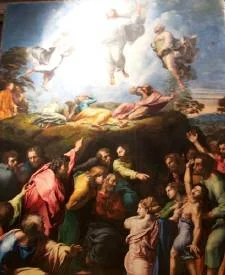
Fundamentalist Christian minister Harold Camping of Oakland, California, has widely publicized that today is the day of the Rapture, when according to some interpretations of the New Testament true believers ascend to heaven to escape impending misery and turmoil on Earth. I am writing in the afternoon, and can't guarantee just yet that Camping is mistaken. But let's assume he is: he was wrong before, and he is just the latest in a long string of mistaken end-times prophets. I promise to post a prompt, heartfelt apologetic retraction if he turns out to be right — and if the internet and I survive the initial cataclysm.
I have a few reflections on end-time prophesies, starting with the admission that I've always found them oddly alluring. As a child, I knew I would be alive in the year 2000. In my young mind this futuristic date glittered with flying cars, modular glass homes, one-piece unisex jumpsuits that somehow didn't look absurd, and one or more Moon colonies. But in addition, I had repeatedly heard predictions that Christ's Second Coming would coincide with the new millennium. Although there is plenty of theological controversy on this point even within Christianity, and even though I was not raised to believe anything of the sort, it always struck me as exciting that such a grand moment might actually take place in my lifetime.
With the year 2000 come and gone, most end-time attention has since moved to 2012, when, among other things, the Mayan calendar supposedly runs out of dates. Even so, I wonder whether Mr. Camping, who is 89 years old, is consciously or unconsciously motivated by the possibility that this greatest of historical events might occur in his remaining natural lifetime. Perhaps it is human nature both to hope and to believe that we live in a unique time. A touch of narcissism perhaps?
Psychologists and others have wondered, and occasionally studied, how believers deal with mistaken prophesy. What will Camping and his followers do or say tomorrow? Leon Festinger's classic 1956 study "When Prophesy Fails" suggests that rather than recanting his beliefs, Camping is apt to rationalize his failed prophesy. For example, he may realize his calculations were off, or declare a divine 11th hour reprieve for the world. Of course, some followers, perhaps the majority, are apt to feel disillusioned and humiliated. The "Great Disappointment" of 1844 offers the historical precedent of a similar failed prophesy.
There is a non-religious definition of rapture: "n. the state of being carried away with joy, love, etc.; ecstasy." In a larger sense, we all seek to connect with something bigger than ourselves. For many, it is religion and its connection with God. Others find connection and larger purpose in humanitarian or political work. Playing music or team sports with others can satisfy this need to some extent, as can being part of the crowd at a concert or other event. Even mobs and riots satisfy this need, albeit in destructive ways. The lure to belong, to share experiences with others, to have a larger purpose, to be "in a groove" seems innate. I once saw a greeting card that read, "People who never get carried away... should be."
It is really no surprise that doomsayers capture headlines and our attention. Whether we expect to rise to heaven today with God's Chosen, or join others in ridiculing the gullible — or blog to readers on the internet — we all can be part of a grand spectacle. It makes this sunny Saturday more special than it would otherwise be, and ourselves a bit more connected to feelings, purposes, and forces greater than ourselves.